WCT #107: AI Might Be Hurting Your Job Search
Three Minute Read
If you're not yet subscribed, click here or the subscribe button below and get concrete, actionable tips and insights every month to help you land great jobs and level up your career game.
If your job search feels harder than it should be, there is a reason.
You are not just competing against other candidates anymore. You are competing inside a system that has fundamentally changed how hiring works.
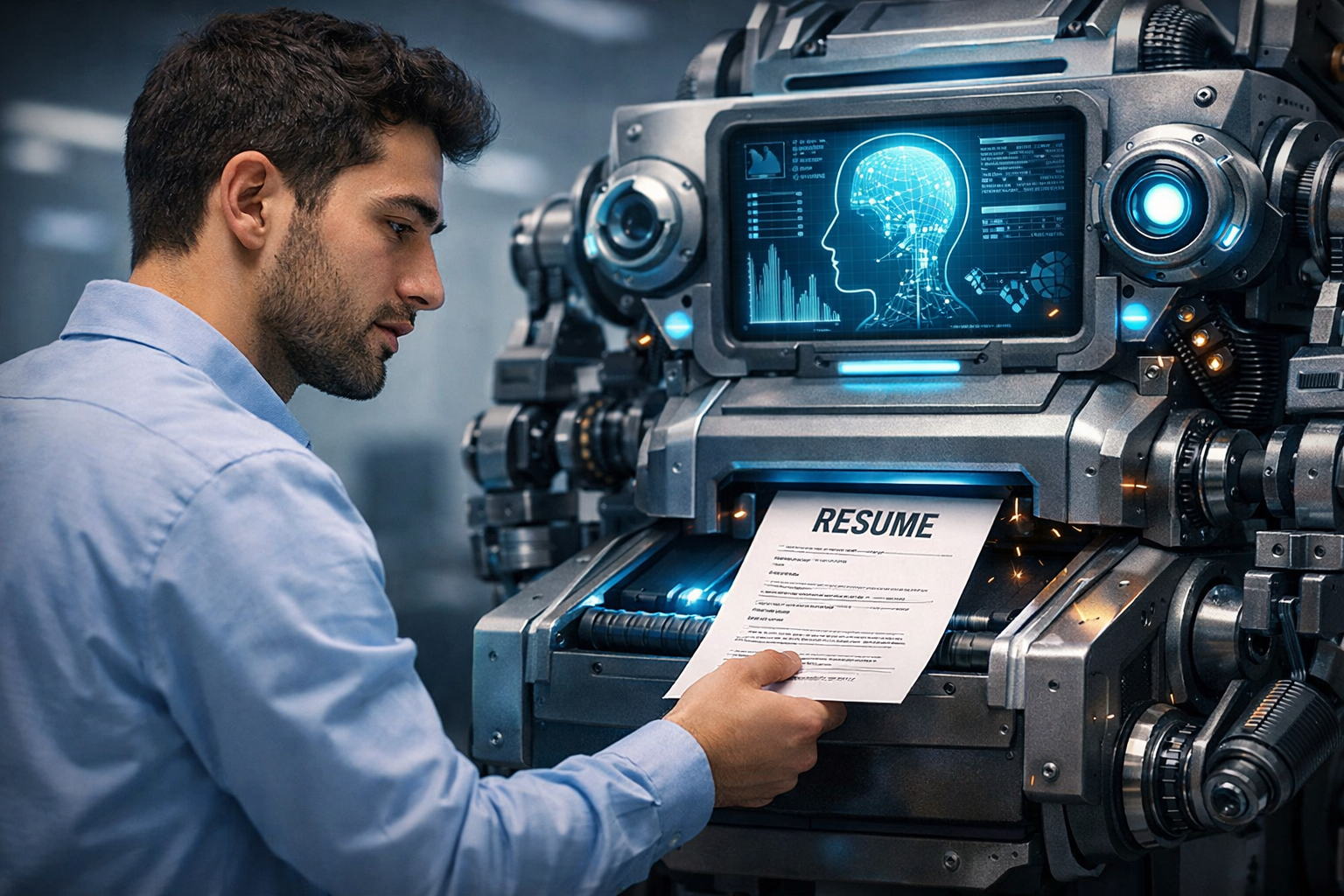
Candidates are using AI to produce resumes, conduct outreach, and prepare for interviews. Employers are using AI to screen, filter, and prioritize candidates at scale.
What used to be a human process now has automation on both sides. That shift has consequences. Most candidates have not adjusted their approach. They are working harder, not smarter, and often moving further away from what actually works.
1. The hiring process is now built for volume, not evaluation.
Hiring teams can now process more candidates than ever before. That sounds like an advantage for job seekers, but it is not. When volume increases, evaluation decreases. Recruiters are not spending more time per candidate. They are spending less. The system is designed to filter quickly, not to understand deeply. That means your application is judged in seconds, often by automated criteria, before a human even sees it. Most candidates respond by applying to more jobs. That only feeds the system. More volume leads to more competition, which leads to less attention per applicant. It becomes a cycle that works against you.
2. Most candidates are using AI in ways that make them indistinguishable.
AI can produce clean, polished, well-structured materials. That is exactly the problem. When everyone uses the same tools in the same way, everything starts to sound the same. I see resumes that are technically strong but lack any sense of judgment or personality. I see outreach messages that read smoothly but feel generic. Candidates think they are improving their positioning, but they are often removing the very things that make them interesting. Hiring managers are reviewing dozens of these. When nothing stands out, nothing gets remembered. Blending in is the fastest way to get overlooked.
3. The biggest risk is not rejection, it is invisibility.
Most candidates worry about saying the wrong thing. In this environment, the greater risk is saying nothing memorable at all. If your materials could be swapped with someone else’s and still make sense, you have a problem. AI tends to smooth out edges, and those edges are often where differentiation lives. Your specific decisions, your tradeoffs, your perspective on your work, those are what create separation. When those disappear, you are left with something that checks boxes but does not create interest. Hiring is not just about qualifications. It is about creating enough interest to move forward.
4. Employers are placing more weight on human signals, making relationship building essential.
As automated screening becomes more common, hiring teams look for ways to regain confidence in their decisions. One of the clearest shifts is a greater reliance on trusted inputs. Referrals, introductions, and prior relationships carry more weight because they reduce uncertainty. A known quantity is easier to evaluate than an unknown one that has been filtered through a system. This does not mean the process is unfair. It means the process is adapting. When it becomes harder to assess candidates based on materials alone, decision-makers look for additional context. That context often comes from people, not documents. For candidates, this changes the playbook. Relationship building is no longer optional or uncomfortable. It is a central part of how hiring works. Conversations, follow-ups, and shared context create recognition that applications cannot. More and more, my clients are getting jobs through warm introductions than cold applications, including many who initially believed they had relatively thin networks.
5. AI should support your thinking, not replace it.
There is a productive way to use AI, and there is a counterproductive way. Used well, it helps you organize ideas, clarify positioning, and prepare more effectively. Used poorly, it becomes a substitute for thinking. The output may look good, but it lacks substance. Your materials should reflect how you think about your work, not how a tool summarizes it. That requires effort. It requires editing, refining, and sometimes starting over. The candidates who benefit from AI are not the ones who rely on it most heavily. They are the ones who use it selectively and retain ownership of their message.
The Bottom Line
The job search has not become impossible. It has become different.
Many candidates are still operating with assumptions that no longer hold. They apply broadly, rely heavily on polished materials, and expect the process to reward those efforts alone. That approach is producing diminishing returns.
There is an opportunity here for candidates who adjust. If most people are blending in, standing out becomes more achievable. If most people are relying on systems, building relationships becomes more valuable. If most people are outsourcing their voice, being clear and specific becomes a differentiator.
The environment is more competitive but also more predictable than it appears. When you understand how the system is working, you can position yourself to work with it rather than against it.
Working hard but not getting traction in your job search?
If your search isn’t producing results, there’s usually a clear reason. I work with clients to identify what’s not working and refocus their efforts on what actually leads to interviews and offers.